Article content


Vlad Khrinenko
10 min read
Product reviews are a continuous source of market intelligence. By analyzing what customers say about product quality, pricing, packaging, sizing, delivery, and competitor alternatives, e-commerce teams can uncover patterns that star ratings alone often miss. Let’s explore what product sentiment analysis is, how it works, which data sources and metrics matter, and how reliable web data collection helps teams turn customer feedback into better product, pricing, and marketplace decisions.
Why Product Sentiment Matters in E-Commerce
In e-commerce, product performance is shaped by more than price, availability, and product photos. Customer opinions influence how buyers compare options, which listings they trust, and whether they complete a purchase. Product sentiment analysis helps teams understand those opinions at scale instead of relying on occasional manual review checks.
For brands, retailers, and marketplaces, this captures the true Voice of the Customer (VoC), creating a more detailed view of how products are perceived in the real world. Star ratings can show whether a product is performing well overall, but sentiment analysis explains why. It can reveal whether customers praise the design, complain about durability, mention poor instructions, compare the product favorably to competitors, or repeatedly raise the same issue after purchase.
Understanding What Drives Purchase Decisions
Customer reviews often reflect the questions future buyers are already asking: Is the product worth the price? Does it match the description? Is the sizing accurate? Does it work as expected? Is the quality consistent?
By analyzing review sentiment, e-commerce teams can identify which product attributes matter most to buyers. A positive sentiment trend around comfort, packaging, battery life, or ease of setup can become a stronger selling point in product pages, ads, and comparison content. Negative sentiment, on the other hand, can highlight objections that may be hurting conversion, making sentiment analysis a vital tool for Conversion Rate Optimization (CRO).
Finding Product Issues Earlier
Negative reviews are not just static reputation signals; tracking them is a critical part of proactive brand reputation management. They can act as early warnings for product, supplier, fulfillment, or listing problems. If complaints about broken packaging, missing parts, inaccurate sizing, or defective batches begin to increase, sentiment analysis can help teams detect the pattern before it becomes a larger ratings problem. This is especially useful for fast-moving categories where product pages receive large volumes of feedback across multiple marketplaces and regions.
Improving Competitive Intelligence
Product sentiment also helps teams understand how their products compare against competitors. Two competing listings may have similar ratings, but very different customer perceptions. One product may be praised for value but criticized for durability, while another may be more expensive but associated with better materials and reliability.
Supporting Better Product and Merchandising Decisions
Sentiment insights can guide product development, assortment planning, and merchandising strategy. Recurring praise can show which features should be emphasized, while recurring complaints can point to changes in design, materials, instructions, packaging, or product bundles.
Connecting Customer Feedback to Business Action
The main value of product sentiment analysis is not simply knowing whether customers are happy or unhappy. It is turning scattered feedback into data-driven decisions teams can act on. When sentiment data is collected consistently, e-commerce teams can track changes over time, compare products across marketplaces, and connect customer perception with pricing, availability, rankings, and sales performance. That makes sentiment analysis a practical tool for improving product pages, refining offers, monitoring competitors, and building stronger customer trust.
Key Data Sources for Product Sentiment Analysis
Product sentiment analysis depends on the quality, variety, and freshness of the data behind it. A single review sample can show what a few customers think, but a broader dataset can reveal recurring patterns across products, competitors, marketplaces, regions, and time periods.
Product Reviews
Product reviews are the core data source for sentiment analysis. They contain direct customer feedback about product quality, usability, packaging, sizing, delivery experience, durability, and value for money.

Using text analytics, review text helps teams understand the reasons behind a rating. For example, a three-star review may not always mean the product itself is poor. The customer may like the item but complain about late delivery, confusing instructions, damaged packaging, or inaccurate product photos. Sentiment analysis helps separate these themes and show what is actually driving the customer’s opinion.
For more accurate analysis, teams usually collect both the review text and related metadata, such as review date, star rating, reviewer location when available, product variant, verified purchase status, and helpfulness votes.
Star Ratings and Review Metadata
Star ratings provide a quick way to measure overall satisfaction, but they are most useful when combined with other review signals. A product with a 4.5-star average rating may still have a growing number of recent complaints, while a lower-rated product may be improving after a product update or supplier change.
Useful metadata can include average rating, total review count, rating distribution, review recency, verified purchase labels, and the number of reviews by product variant. These fields help teams add structure to sentiment analysis and compare products more consistently.
For example, a sudden increase in one-star reviews over the last month may point to a recent quality issue, even if the overall rating remains high because of older positive reviews.
Review Titles and Summaries
Review titles are easy to overlook, but they often contain concentrated sentiment. Customers frequently use titles to summarize their strongest opinion: “Great value,” “Runs small,” “Stopped working after a week,” or “Perfect for travel.”
Because review titles are short and direct, they can help identify recurring product themes quickly. They are especially useful when analyzing large review datasets, where repeated phrases can reveal common praise points or complaints before reading full review text.
Customer Q&A Sections
Customer Q&A sections show what buyers want to know before purchasing. These questions often reveal uncertainty around compatibility, sizing, materials, setup, shipping, warranty, accessories, ingredients, or product use cases.
While reviews show post-purchase experience, Q&A content shows pre-purchase concerns. This makes it valuable for identifying missing information on product pages, common objections, and features that customers care about but may not find clearly explained in the listing.
For example, if many shoppers ask whether a product works with a specific device, fits a certain size, or includes a specific accessory, that may indicate an opportunity to improve product descriptions or launch a better-matched product variant.
Product Pages and Listing Content
Product sentiment is easier to interpret when review data is connected to product page information. Titles, descriptions, images, bullet points, specifications, prices, discounts, availability, seller details, and product variants all provide context for customer feedback.
For instance, negative sentiment around “smaller than expected” may point to inaccurate size information in the listing. Complaints about “not as pictured” may suggest a mismatch between product images and the actual item. Positive sentiment around a specific feature may show which listing details are most persuasive.
Marketplace Search and Category Pages
Search and category pages add competitive context to sentiment analysis. They show how products appear alongside alternatives, which listings rank highly, which badges or promotions are visible, and how price, rating, availability, and review count compare within a category.
This helps teams connect sentiment with market performance. A product may receive positive feedback but rank poorly because competitors have stronger pricing, more reviews, faster shipping, or better marketplace visibility. Another product may rank well despite mixed sentiment because it has strong brand recognition or aggressive discounts.
Social Media, Forums, and Community Discussions
Social media posts, forums, Reddit discussions, blog comments, and niche communities can provide broader sentiment signals outside marketplace review sections. These sources are especially useful for categories where customers actively share experiences, compare alternatives, or discuss product problems in detail.
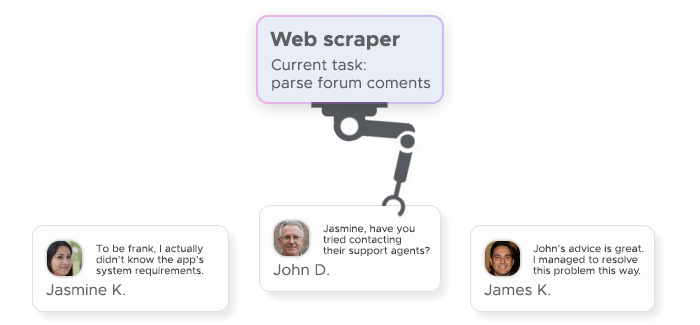
Compared with product reviews, this data can be less structured and harder to classify, but it may reveal trends earlier. Viral complaints, recurring product comparisons, influencer-driven demand, or emerging feature expectations can appear in community discussions before they become visible in marketplace ratings.
Support Tickets and Internal Feedback
If available, internal customer support data can add another layer to product sentiment analysis. Support tickets, return reasons, refund requests, and surveys can reveal a broader view of the overall Customer Experience (CX) that buyers may not mention publicly.
This data is especially useful for connecting public sentiment with operational reality. For example, a product may have only a small number of negative public reviews, but a growing number of return requests related to the same defect or setup problem.
How Product Sentiment Analysis Works
A typical workflow starts with data collection and ends with dashboards, reports, or alerts that show how customer perception changes across products, marketplaces, competitors, and regions.
1. Collect Relevant Product Data
The first step is collecting the data needed for analysis. This usually includes review text, review titles, star ratings, review dates, product names, SKUs, categories, brands, prices, availability, seller information, and product variants.
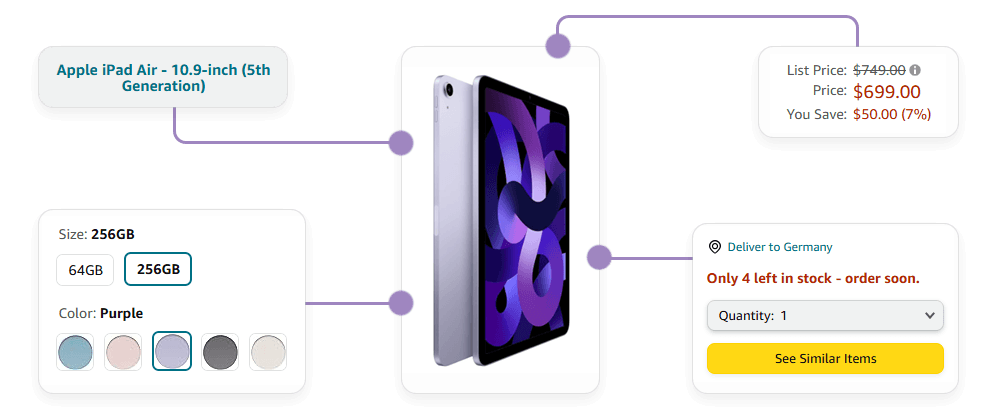
For e-commerce sentiment analysis, review data is most useful when it is connected to product and marketplace context. A negative review about “poor quality” becomes more meaningful when teams can see which product variant it refers to, when it was posted, which marketplace it came from, and whether similar complaints appear across competing products.
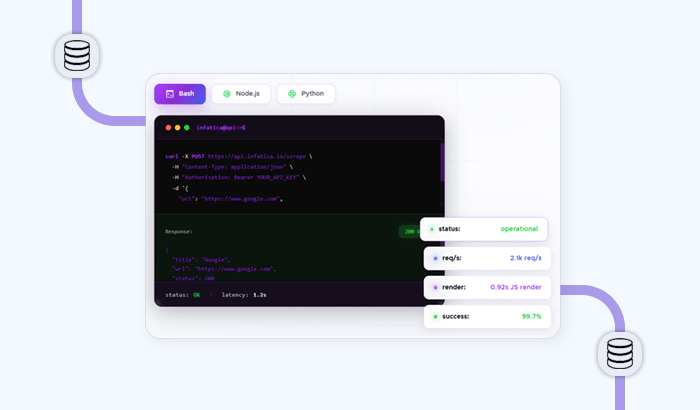
At scale, this is where manual collection quickly becomes impractical. Teams may need to monitor thousands of product pages across different marketplaces, categories, and regional storefronts within a multichannel e-commerce strategy. A Web Scraper API can help collect public product, review, pricing, and listing data automatically, giving analysts and data teams a more reliable foundation for sentiment workflows.
2. Clean and Normalize the Data
Once the data is collected, it needs to be cleaned and standardized. Review datasets often contain duplicate entries, missing fields, inconsistent date formats, irrelevant text, language differences, and product variants that need to be mapped correctly.
This step helps make the analysis more accurate. For example, reviews for different colors, sizes, flavors, or configurations may be grouped under one listing, even though customers have very different experiences with each variant. Without normalization, a team may incorrectly assume that all negative sentiment applies to the entire product instead of one specific version.
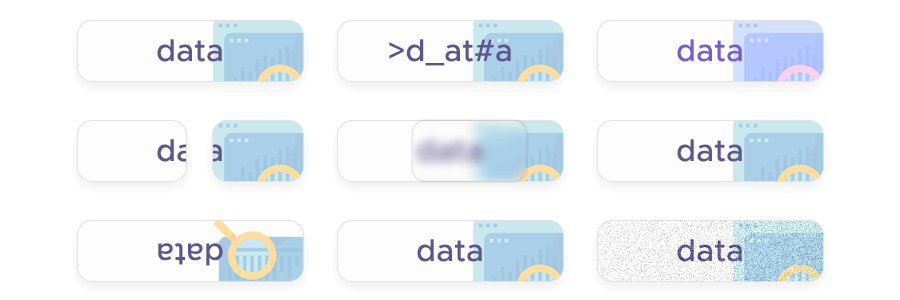
Cleaning also includes removing noise. Some reviews may focus on shipping delays, seller behavior, or customer service rather than the product itself. Depending on the goal, these comments may need to be separated from product-specific sentiment.
3. Classify Sentiment
After cleaning, the feedback is classified by sentiment, often using Natural Language Processing (NLP) models. At the simplest level, this means labeling each review, sentence, or phrase as positive, negative, or neutral. For example:
- “The battery lasts all day” would likely be positive.
- “The material feels cheap” would likely be negative.
- “Arrived in a blue box” may be neutral.
More advanced workflows can go beyond basic sentiment labels and detect emotion, urgency, intensity, or purchase intent. A mildly negative comment such as “the instructions could be clearer” may not require the same response as “the product broke after two days.” Assigning a precise sentiment score helps teams prioritize the issues that matter most.
4. Extract Product Aspects
For e-commerce, sentiment analysis becomes much more useful when it identifies what customers are talking about. This is known as aspect-based sentiment analysis. Instead of only showing that a review is negative, aspect-based analysis can show whether the negativity relates to sizing, durability, packaging, delivery, design, setup, compatibility, battery life, ingredients, or price.
For example, a customer might write: “The headphones sound great, but the case feels flimsy and the Bluetooth connection drops sometimes.” A basic model may label the review as mixed or neutral. Aspect-based analysis can separate it into more useful insights:
- Sound quality: positive
- Case quality: negative
- Bluetooth connection: negative
5. Group Feedback into Themes
Individual reviews are useful, but patterns are more valuable. Once sentiment and aspects are identified, teams can group similar comments into broader themes. For example, hundreds of reviews may mention “runs small,” “tight fit,” “size up,” or “smaller than expected.” These phrases can be grouped into a sizing issue. Similarly, comments about “leaking,” “weak seal,” or “spilled in the box” may point to a packaging or product design problem.
Theme grouping helps teams move from isolated comments to clear business insights. Instead of saying “some customers are unhappy,” the analysis can show that “18% of negative reviews in the last 30 days mention sizing accuracy.”
6. Track Sentiment Over Time
Sentiment analysis is most valuable when it is continuous. A one-time review analysis can show the current state of customer opinion, but ongoing monitoring shows how sentiment changes after product updates, pricing changes, supplier switches, packaging redesigns, or marketplace campaigns.
For example, a sudden increase in negative sentiment around “broken parts” may indicate a quality control issue. A rise in positive sentiment around “easy setup” after rewriting instructions may show that a listing or product improvement worked.
Why Reliable Web Data Collection Comes First
Product sentiment analysis is only as accurate as the data behind it. If review data is incomplete, outdated, duplicated, or disconnected from product context, even the best sentiment model can produce misleading insights.
This is where scalable web data collection becomes the foundation of the workflow. Instead of spending engineering time on scraping infrastructure, proxy management, JavaScript rendering, retries, and data delivery, e-commerce teams can use a Web Scraper API to collect the product and review data they need in a structured, analysis-ready format.
Infatica’s Web Scraper API helps teams build this data foundation at scale. It supports reliable collection of public e-commerce data, so analysts, data teams, and product teams can focus on turning customer feedback into better decisions.
Frequently Asked Questions
Yes. Product sentiment analysis can compare how customers discuss competing products, including quality, pricing, durability, packaging, sizing, and ease of use. This helps brands find competitive gaps, improve positioning, and identify features customers value most.
Web scraping and automated data extraction help teams collect public product, review, pricing, and marketplace data at scale. Instead of manually checking pages, teams can build repeatable data pipelines for sentiment analysis across products, competitors, regions, and platforms.
Useful data includes review text, star ratings, review dates, product variants, review titles, Q&A content, pricing, availability, and marketplace context. Combining these signals helps teams understand both customer opinions and the conditions behind them.
E-commerce teams use product sentiment analysis to identify recurring complaints, compare competitors, improve listings, guide product development, and monitor customer satisfaction over time. It helps turn scattered review data into practical insights for better business decisions.
Product sentiment analysis is the process of analyzing customer feedback to understand how people feel about a product, feature, brand, or category. In e-commerce, it usually involves reviews, ratings, Q&A sections, and public marketplace data.