Article content


Pavlo Zinkovski
8 min read
Affiliate campaigns often depend on location, session stability, and accurate market visibility. Proxies help to test localized affiliate offers, verify redirects, check landing pages, monitor competitors, and review campaigns from the GEOs they actually target. In this article, we’ll explain why affiliates use proxies, which workflows benefit most, how different proxy types compare, and how to build a responsible proxy setup for campaign testing, research, and monitoring.
Why Affiliates Use Proxies
Affiliate marketing depends on seeing the market clearly. A campaign can look correct from one location, browser, or network – but behave differently for users in another country, city, device environment, or traffic source. Proxies help affiliates check these differences more accurately by routing requests through IP addresses that match the markets they work with.
Checking Campaigns From the Right Location
Many affiliate campaigns are rely on specific GEOs. An affiliate offer available in Germany may not appear in France; a landing page may show a different language in Spain; a pricing page may display another currency in the United States. Without location-aware testing, teams can miss these differences and launch campaigns that look fine internally but fail for the actual audience.
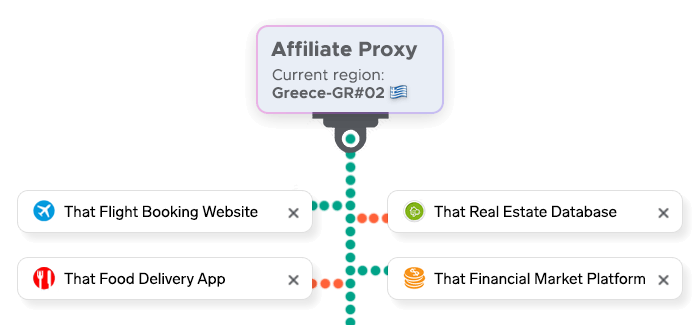
Proxies let affiliates view websites, ads, and offer flows from the locations they target. This makes it easier to confirm that users see the right creative, landing page, language, pricing, and call to action before the campaign starts spending real budget.
Testing Redirects and Tracking Flows
Affiliate funnels often include several steps: an ad, a conversion tracking link, a pre-lander, an offer page, and sometimes a geo-redirect based on the user’s IP location. If one step breaks, the campaign may lose conversions even when the traffic itself is relevant.
With proxies, affiliates can test these flows from different regions and network environments. For example, a team can check whether a link sends users in Brazil to the correct localized offer, whether a pre-lander loads properly in a target market, or whether a conversion tracking platform records the visit as expected.
Verifying Ads and Landing Pages After Launch
Campaign QA does not end once an ad goes live. Ads can be rejected, page localization can change, redirects can break, and offers can be paused or replaced by the advertiser. Affiliates need a way to check what users are actually seeing, not just what the campaign dashboard reports.
Proxies help to perform ad verification from different markets. This is especially useful for international campaigns, where local content, compliance messages, payment methods, or offer availability may vary by region.
Supporting Browser-Based Workflows
Affiliate teams often work with multiple clients, markets, ad accounts, affiliate networks, analytics dashboards, and testing environments. Keeping these workflows organized requires consistency: the right anti-detect browser profile, the right session, the right cookies, and the right IP context.
This is where proxy type matters. Rotating residential proxies can be useful for distributed research and geo-testing, while static ISP proxies or sticky residential sessions are better suited for workflows that require continuity. For high-speed internal checks, datacenter proxies may be enough; for mobile-first campaigns, mobile proxies can help teams test how pages behave from cellular networks.
Researching Competitors and Market Conditions
Affiliates also use proxies to understand how offers, ads, pricing, and search results appear in different locations. A competitor’s landing page may show one message in the UK and another in Canada. A search result may vary by country. An offer may be visible only from selected regions.
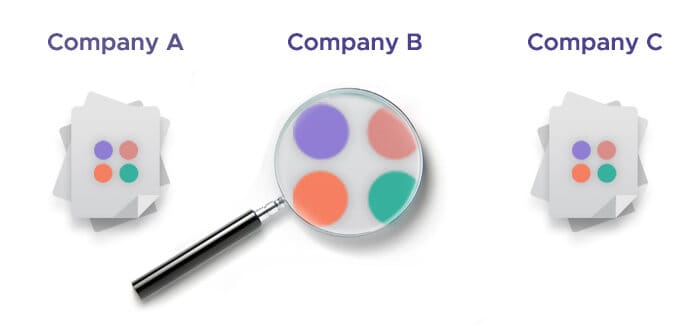
By viewing markets from local IP addresses, affiliates can build a more accurate picture of the competitive landscape. This helps with campaign planning, publisher research, pricing checks, SERP monitoring, and identifying which offers are active in each market.
Choosing the Right Proxy Type for Affiliate Marketing
| Proxy type | Best fit for affiliates | Why it works | Watch-outs |
|---|---|---|---|
| Residential proxies | Geo-testing, offer checks, localized research, and ad verification | Residential IPs help affiliates view websites, ads, and landing pages from user-like locations in target markets. | Best suited for workflows where location accuracy matters more than raw speed. |
| Datacenter proxies | High-speed QA, internal checks, and large-scale research on less sensitive targets | Datacenter proxies are fast, cost-efficient, and easy to scale for repetitive campaign checks. | They may be less suitable for websites that rely heavily on IP reputation or residential context. |
| Static ISP proxies | Stable sessions, account-based workflows, dashboards, and long-running browser profiles | Static ISP proxies combine ISP-routed IPs with session consistency, making them useful when affiliates need the same IP over time. | They are better for continuity than broad IP rotation. |
| Mobile proxies | Mobile-first campaigns, app flows, carrier-sensitive checks, and mobile landing page QA | Mobile proxies help affiliates test how campaigns behave from cellular network environments. | They are usually best reserved for targeted mobile checks rather than every workflow. |
| Residential IPv6 proxies | IPv6-compatible research, scalable infrastructure, and modern web environments | Residential IPv6 proxies can support large-scale workflows where IPv6 is accepted by the target platforms. | Not every website, ad platform, or affiliate tool handles IPv6 traffic equally well. |
In practice, affiliate teams often use more than one proxy type: residential proxies for market-level visibility, static ISP proxies for stable sessions, datacenter proxies for speed, and mobile proxies for ad verification steps.
Proxy Setup Tips for Affiliate Teams
A proxy setup should reflect how the affiliate team actually works. Campaign QA, geo-testing, mobile checks, competitor research, and account-based workflows all place different demands on speed, location accuracy, session stability, and IP rotation. Instead of choosing one proxy type for every task, affiliates get better results by matching each workflow to the right proxy configuration.
Use Sticky Sessions When Continuity Matters
Some affiliate workflows need a stable IP for more than one request. This includes logging into dashboards, working inside browser profiles, testing multi-step funnels, reviewing account settings, or checking pages that rely on cookies and session history. In these cases, rotating too aggressively can interrupt the workflow or create inconsistent results.
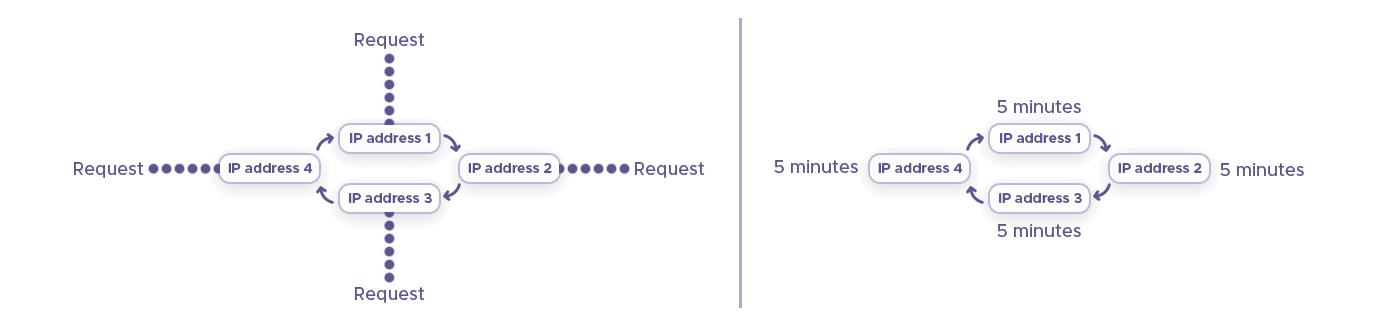
Sticky sessions help keep the same IP for a defined period, making them better suited for browser-based tasks and longer QA sessions. Static ISP proxies can also be useful here because they provide stable IPs for workflows where continuity matters more than broad rotation.
Use Rotation for Research and Monitoring
Other workflows benefit from rotation. Competitor research, SERP checks, offer monitoring, price comparisons, and large-scale page reviews often involve repeated requests across many pages or regions. In these cases, affiliates usually do not need to preserve one session for a long time – they need coverage, distribution, and reliable request handling.
Rotating residential proxies are often a strong fit for this kind of work because they help teams collect market views from different locations. Datacenter proxies can also be useful for faster, lower-cost checks on websites where residential context is not required.
💡
Infatica offers several proxy rotation options: timed rotation (every 5/10/15.../60 minutes), rotation with each request, or sticky.
Separate Workflows by Proxy Type
A common mistake is trying to run every affiliate task through the same proxy setup. Mobile campaign checks, dashboard access, ad verification, and large-scale research do not have the same requirements. Treating them as one workflow can lead to unnecessary costs, unstable sessions, or inaccurate test results.
A cleaner setup is to assign proxy types by job. Residential proxies can support localized campaign checks and ad verification. Static ISP proxies can support stable browser sessions. Mobile proxies can be reserved for mobile-first or carrier-sensitive testing. Datacenter proxies can handle speed-focused internal checks, while residential IPv6 proxies can support IPv6-compatible workflows where scale is the priority.
Keep Browser Profiles, Cookies, and IPs Organized
Affiliate teams often work across several markets, clients, traffic sources, and offer categories. Without a clear structure, it becomes difficult to know which profile, proxy, account, or session belongs to which workflow.
Teams should keep a simple mapping between browser profiles and proxy assignments. For example, each profile can be tied to a specific country, client, campaign type, or testing environment. This makes QA more repeatable and reduces the risk of confusing results caused by mixed cookies, inconsistent locations, or the wrong IP context.
Monitor Performance
A large proxy pool is useful, but it should not be the only buying criterion. For affiliate teams, practical performance matters more: whether the IPs match the right locations, whether sessions remain stable, whether pages load quickly, and whether the setup works reliably during campaign checks.
Useful metrics include response time, uptime, success rate, location accuracy, and session behavior. Affiliates should also look at how easily they can configure rotation, sticky sessions, authentication, and targeting. A proxy provider that supports multiple proxy types from one platform can make this easier because teams do not need separate vendors for every workflow.
Compliance and Responsible Proxy Use in Affiliate Marketing
Proxies can make affiliate workflows more accurate and scalable, but they do not remove the need to follow platform rules, affiliate program policies, and applicable laws. In affiliate marketing, the line between legitimate campaign testing and abusive activity can become blurry if teams focus only on access or scale. A responsible proxy setup should support verification, localization, QA, and research – not ad fraud, spam, or misleading traffic.
Use Proxies for Visibility, Not Misrepresentation
The safest way to think about proxies in affiliate marketing is as a visibility tool. They help teams see how ads, offers, redirects, landing pages, and search results appear from different locations or network environments. This is useful for checking whether a campaign behaves correctly for real users in the target market.
Problems start when proxies are used to misrepresent traffic, inflate clicks, manipulate conversions, bypass publisher restrictions, or create activity that does not reflect genuine user interest. These workflows can damage advertiser relationships, violate affiliate program terms, and put accounts or payouts at risk.
Avoid Fake Traffic and Artificial Engagement
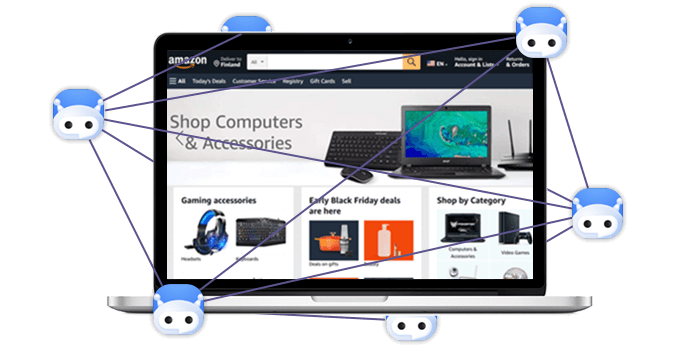
Responsible proxy use should never involve generating fake impressions, clicks, signups, installs, reviews, or conversions. Affiliate marketing depends on advertiser trust, networks, publishers, and users. Artificial engagement undermines that trust and can quickly turn a campaign from performance marketing into click fraud.
Affiliate teams should also avoid using proxies to simulate users at scale, manipulate attribution, test conversion flows with false data, or create misleading performance signals. Proxies are useful for checking whether a funnel works; they should not be used to manufacture campaign results.
Choose Providers With Clear Policies and Responsible Sourcing
The proxy provider also matters. Affiliates should look for vendors that are transparent about acceptable use, IP sourcing, customer verification, and abuse prevention. A provider with clear policies and compliance controls is better suited for long-term campaign operations than one focused only on access and volume.
For brands and agencies, this is especially important. Their clients may ask how proxy infrastructure is sourced, how abuse is prevented, and whether the provider supports responsible data practices. Working with a provider that takes these questions seriously can reduce risk and make proxy use easier to explain internally.
Frequently Asked Questions
Affiliates use proxies to test localized offers, verify ads, check redirects, monitor landing pages, and research competitors from different locations. They help teams see campaigns the way users in target markets are likely to see them.
Residential proxies are a strong default for geo-testing, ad verification, and localized research. Static ISP proxies fit stable sessions, datacenter proxies support high-speed checks, mobile proxies help with mobile-first campaigns, and IPv6 proxies support compatible large-scale workflows.
Yes. Proxies help affiliates check whether tracking links, pre-landers, geo-redirects, and final offer pages work correctly for each target location. This can reveal broken routes, expired offers, fallback pages, or incorrect regional targeting.
Mobile proxies are not necessary for every affiliate workflow, but they are useful for mobile-first campaigns, app install flows, carrier-sensitive offers, and mobile landing page QA. Broader research and geo-testing can often use residential proxies instead.
Proxy use depends on the workflow, platform rules, affiliate network terms, and applicable laws. Responsible use focuses on campaign QA, localization, research, and monitoring – not fake traffic, artificial engagement, click inflation, or policy violations.