Article content

Jan Wiśniewski
6 min read
Let’s explore how Shopify detects and limits automated traffic, why many Shopify-related tasks require proxies, and how different proxy types perform on Shopify-powered stores. We’ll also cover best practices for choosing proxies that balance access stability, accuracy, and scale.
Common Shopify Use Cases That Require Proxies
Shopify proxies are rarely used “just to scrape.” In most cases, they support specific business workflows that require reliable, repeatable access to Shopify-powered stores at scale.
Price and Competitor Monitoring
Ecommerce teams regularly track competitor pricing, discounts, and promotions across multiple Shopify stores. Doing this manually is inefficient, and sending frequent automated requests from a single IP quickly leads to throttling or blocks. Proxies help distribute requests across multiple IP addresses, making continuous price monitoring more stable and less disruptive.
Product Availability and Stock Tracking
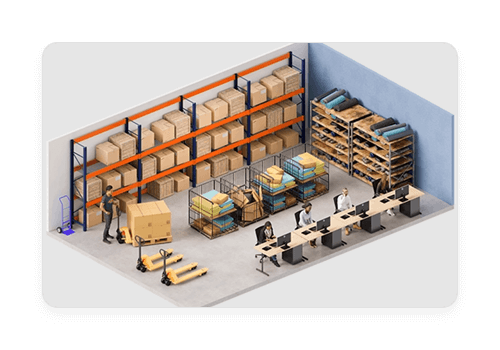
Monitoring product availability – especially for limited releases or high-demand items – often involves frequent checks on product pages or variant endpoints. Shopify stores tend to restrict repeated requests from the same source, particularly during peak traffic periods. Proxies allow these checks to run consistently without triggering automated defenses.
Market Research Across Regions
Shopify storefronts often display different pricing, currencies, product assortments, or shipping options depending on the visitor’s location. Businesses conducting market research need to access the same store from multiple countries or regions to collect accurate data. Without proxies, geo-restricted content and redirects can limit visibility.
Large-Scale Data Collection and Scraping
Agencies, analytics platforms, and data providers collect Shopify data for trend analysis, catalog aggregation, or ecommerce intelligence. At this scale, direct connections are rarely viable. Proxies enable higher request volumes while helping traffic blend in with real user behavior, reducing the likelihood of IP-based blocking.
Managing Multiple Shopify Accounts
Sellers and agencies sometimes manage multiple Shopify accounts for different brands or clients. Logging into several admin dashboards or switching between accounts from the same IP can trigger security checks or temporary access restrictions. Using separate proxy connections helps isolate sessions and maintain account stability.
Automation Tools and Monitoring Scripts

Many Shopify-related tools – such as uptime monitors, alert systems, or custom automation scripts – run continuously in the background. Even low-intensity automation can accumulate a high number of requests over time. Proxies help spread this traffic and maintain consistent access without interruptions.
Testing Localized Storefronts and User Experiences
Developers and QA teams often need to test how Shopify stores behave for users in different locations, devices, or network types. Proxies make it possible to simulate real-world access conditions without relying on physical devices or local networks.
What Makes a Proxy “Shopify-Safe”?
Not all proxies perform equally on Shopify-powered stores. Because Shopify evaluates traffic using multiple signals at once, a proxy that works well on generic websites may fail quickly in a Shopify environment. A “Shopify-safe” proxy is less about raw speed or IP count and more about how closely the traffic resembles real shopper behavior.
Clean IP Reputation
IP reputation is one of the first filters Shopify applies. IPs that have been overused, flagged for abuse, or associated with automation are more likely to face immediate blocks or CAPTCHAs. Proxies sourced from clean, regularly refreshed IP pools generally perform better over longer periods.
💡 Infatica’s residential proxies are sourced ethically, helping our clients to appear as genuine users from various locations.
Geographic Accuracy
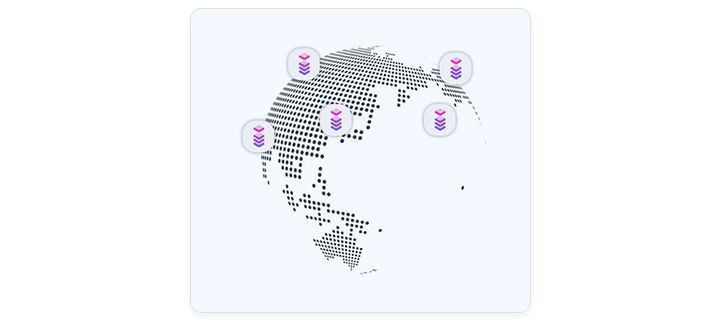
Shopify content often depends on visitor location. Using proxies that match the target country – or even city – helps avoid mismatches between IP location, language, currency, and storefront configuration. Geographic accuracy improves both data quality and access stability.
💡 Infatica offers over 195 geolocations across the Americas, Europe, and Asia, coupled with country, city, and ISP-level targeting.
Real-User Network Signals
Shopify favors traffic that originates from networks commonly used by real customers. Residential, ISP, and mobile networks naturally carry these signals, while traffic from heavily abused datacenter ranges is more likely to be scrutinized. The closer a proxy’s network profile is to a typical end user, the lower the detection risk.
Session Stability and Persistence
Many Shopify workflows – such as browsing product variants, adding items to a cart, or accessing account-related pages – rely on consistent sessions. Proxies that allow sticky sessions or long-lived connections reduce session breaks and lower the chance of triggering security checks during multi-step interactions.
Controlled IP Rotation
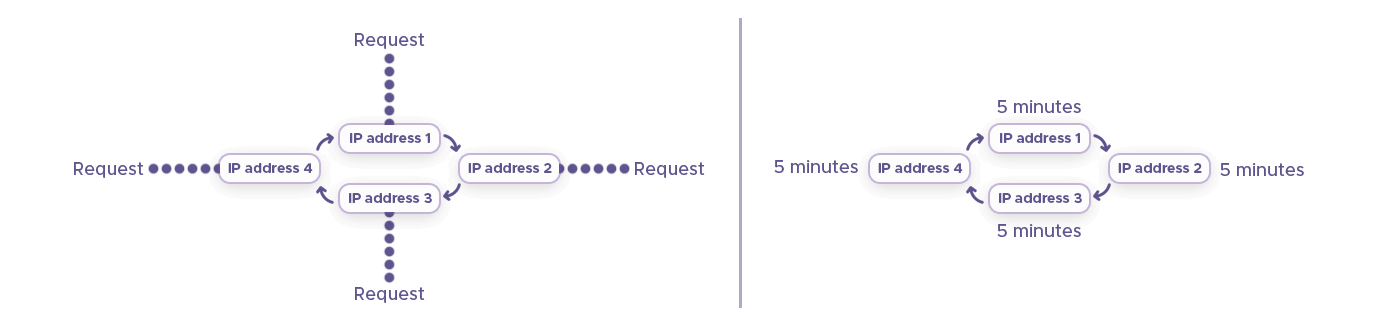
While rotation helps distribute traffic, uncontrolled or overly aggressive IP changes can look unnatural on Shopify stores. A Shopify-safe setup balances rotation with predictability, ensuring that IP changes align with the intended task rather than switching on every request.
💡 Infatica offers several IP rotation approaches, including request- and time-based methods.
Consistent Request Behavior
Beyond IPs, Shopify monitors how requests are made. Proxies must support consistent headers, TLS fingerprints, and request timing that align with browser or app traffic. Sudden spikes in request volume or erratic access patterns can undermine even high-quality IPs.
Reliability and Failover
Unstable proxies that frequently disconnect or return errors can cause repeated retries, increasing request volume and raising detection risk. Reliable infrastructure with automatic failover helps maintain smooth access and prevents unnecessary traffic anomalies.
💡 With a 99.9% network uptime and 0.4s response time, Infatica’s proxy solutions ensure that you don’t miss valuable Shopify data points.
Choosing the Right Proxy Type for Shopify
| Proxy type | Best for Shopify use cases | Strengths on Shopify |
|---|---|---|
| Residential proxies | Price monitoring, product scraping, availability tracking, market research | High trust signals, closely resemble real shoppers, strong performance on protected storefronts |
| Mobile proxies | High-risk automation, checkout flows, account-related actions | Very strong trust signals, shared mobile IPs reduce individual detection risk |
| Static ISP proxies | Logged-in sessions, store admin access, long-running monitoring tasks | Stable IPs with residential-level trust, ideal for session persistence |
| Datacenter proxies (shared) | Low-risk data collection, public storefront pages, testing | Cost-effective, high speed, easy to scale |
| Datacenter proxies (dedicated) | Controlled scraping, consistent workloads, internal tools | Better IP reputation than shared datacenters, predictable performance |
| Residential IPv6 proxies | Large-scale crawling where IPv6 is supported, emerging markets | Less saturated IP space, growing Shopify compatibility, high scalability |
Access Shopify Data Without Unnecessary Blocks
Explore proxy solutions built for ecommerce use cases – or talk to an Infatica expert to find the best setup for your Shopify workflows.
Frequently Asked Questions
Shopify proxies are intermediary IPs used to route requests to Shopify stores. They help avoid IP blocks, enable multiple account management, support price monitoring, and allow automated workflows while appearing as legitimate shopper traffic.
Residential proxies generally perform best for Shopify scraping due to high trust signals and real-user IP behavior. Mobile proxies work well for high-risk actions, while static ISP or dedicated datacenter proxies are suited for account access or low-risk monitoring.
Yes. Shopify can flag traffic from datacenter IPs more easily than residential or mobile IPs. Dedicated datacenter proxies reduce some risk, but residential or mobile proxies still offer higher reliability for sensitive Shopify tasks.
Shopify stores often display region-specific pricing, inventory, or content. Using proxies with accurate geographic locations ensures requests match expected shopper regions, avoids redirects or blocks, and provides accurate data for market research and testing.
To reduce block risk, rotate IPs carefully, maintain session stability, match location with the target store, control request frequency, and mimic real user behavior. Using high-quality proxies with clean reputations further improves access reliability.