Article content

Denis Kryukov
12 min read
Author note
This guide was written by Infatica’s content team, which covers SEO data collection, SERP scraping, proxy infrastructure, and compliant access to public web data.
In the competitive world of search engine optimization, data is everything – and proxies are the key to accessing it at scale. Whether you're tracking keyword rankings, analyzing competitors, or running localized SEO campaigns, proxies help you gather accurate, unrestricted search data without getting blocked. In this guide, we’ll explore how SEO proxies work, why they’re essential, and how to choose the right solution for your needs.
What Are SEO Proxies?
SEO proxies are intermediary IP addresses (usually residential ones) that let SEO tools collect search-engine data from specific locations without being rate-limited or blocked. They route your rank checks, SERP scrapes, and competitor research through real-user IPs, so Google returns accurate, localized results instead of flagging the activity. In short: they’re the infrastructure that makes scalable, geo-accurate SEO data collection possible.
💡
Key takeaways: SEO proxies help SEO tools collect localized, repeatable search data for rank tracking, SERP analysis, competitor research, and audits. Residential proxies are usually best for localized and high-sensitivity SEO tasks, datacenter proxies can work for faster high-volume checks, and mobile proxies are useful when you need to monitor mobile-specific search results. Use them when you need accurate data across countries, cities, devices, or search result types — not as a way to directly improve rankings.
How Do SEO Proxies Work?
When you're doing SEO work – like checking keyword rankings, scraping search engine results, or researching competitors – you're sending lots of requests to search engines like Google. If you do this too often from the same IP address, search engines might flag your activity as suspicious and block or throttle your access. That’s where SEO proxies come in.
What a Proxy Does
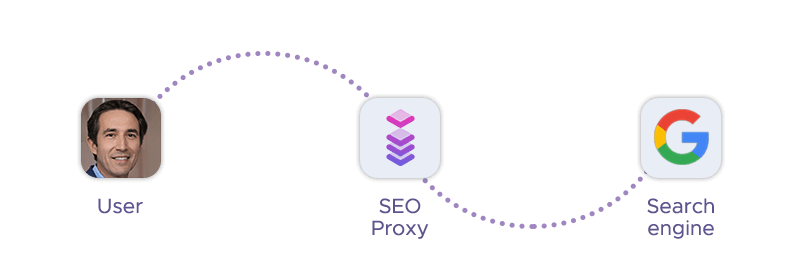
A proxy acts as a middleman between you and the internet. When you use a proxy:
- Your request goes to the proxy server first, not directly to the target website.
- The proxy then forwards the request to the target site (e.g., Google).
- The site responds to the proxy, which then sends the data back to you.
So, instead of search engines seeing your real IP address, they see the proxy's IP.
Why You Need Proxies for SEO
Search engine optimization (SEO) today is as much about data as it is about content. To make informed decisions, marketers and SEO specialists rely on tools that collect vast amounts of search data quickly and accurately. But without proxies, these tools hit roadblocks fast. Here's why proxies are a must-have for modern SEO workflows:
Web Scraping for SERP Tracking and Competitor Research
To stay ahead of the competition, you need to know exactly where your pages rank, how search results change over time, and what your competitors are doing. SEO proxies allow you to:
- Scrape SERPs at scale, without being blocked.
- Gather insights on competitors’ rankings, snippets, ad placements, and content strategies.
- Monitor search trends and changes in real time – across thousands of keywords and multiple locations.
Without proxies, scraping this data risks getting your IP flagged, throttled, or blocked by search engines.
Localized Search Results (Geo-Targeting)
Search engines personalize results based on the user’s location. So if you want to see what a customer in Berlin sees when they search for “best running shoes,” you can’t rely on your New York-based IP. Proxies solve this by giving you access to IP addresses from specific cities or countries, allowing you to:
- Track localized keyword performance.
- Audit international SEO efforts.
- Tailor content based on actual regional SERP results.
This level of geographic accuracy is essential for global SEO campaigns.
Avoiding IP Bans and Rate Limits
Search engines have strict limits on how many requests can come from a single IP. If you exceed those limits – even through legitimate data collection – you risk temporary blocks, CAPTCHAs, and skewed or incomplete data.
How to Bypass an IP Ban: Most Effective Ways | Infatica
Discover effective techniques to bypass IP bans, ensuring uninterrupted web scraping and smooth data extraction using proxy servers and advanced strategies.
 Vlad Khrinenko
SEO proxies help distribute your requests across multiple IPs, making your activity look like that of many normal users instead of one bot. This not only protects your tools from being blocked but also keeps your data accurate and reliable.
Automation of Tasks Like Keyword Rank Tracking
Automated SEO tools rely on proxies to operate efficiently at scale. From checking keyword positions to tracking search visibility, these tools send out thousands of queries – far more than a single IP can handle safely.
Web Scraping Automation: Comparing the Best Tools for Efficient Data Extraction
Find the perfect web scraping tool for your project. Compare features, scalability, and automation capabilities of top tools like Scrapy, and Selenium in our expert guide.
Jovana Gojkovic
Using rotating or residential proxies ensures smooth operation of rank tracking tools, continuous access to search engine data, and fewer disruptions from captchas or IP-based restrictions. This automation is what makes SEO campaigns scalable – and proxies are the infrastructure that keeps it running.
Types of Proxies Used in SEO
| Feature | Residential Proxies | Datacenter Proxies | Mobile Proxies |
|---|---|---|---|
| IP Source | Real devices connected to home ISPs | Cloud servers or data centers | Real mobile devices via cellular networks |
| Anonymity Level | High – appear as real users | Moderate – more likely to be flagged | Very High – trusted by most websites |
| Speed | Moderate | Very Fast | Slower due to mobile networks |
| Success Rate for Scraping | High (especially for geo-specific tasks) | High for non-sensitive scraping | Very High – hard to detect or block |
| Best For | Geo-targeted SERP tracking, competitor analysis | Bulk scraping, automated rank tracking | Mobile SEO testing, ultra-anonymous scraping |
| Cost | Higher | Lower | Highest |
| IP Rotation | Yes – via rotating pools | Yes – fast and flexible | Yes – but often slower and more limited |
| Risk of Blocking | Low | Moderate to High (if overused or flagged) | Very Low |
| Geo-targeting Capability | Excellent – wide country and city-level coverage | Limited – mostly generalized or regional IPs | Good – based on mobile carrier networks |
Do Proxies Actually Improve Your SEO Data?
SEO proxies do not improve your rankings directly. They will not make pages rank higher, increase crawl frequency, or change how search engines evaluate your website. Their value is different: they improve the reliability of the search data you collect for rank tracking, SERP analysis, competitor research, and SEO audits.
More accurate location-based results
Search results vary by country, city, language, device, and search context. A keyword that ranks in one region may appear lower, higher, or not at all in another. Without location-specific proxies, SEO tools may collect results from the wrong market and make local visibility look better or worse than it actually is.
SEO proxies help tools send requests from the locations you want to measure. For example, a business tracking “best insurance broker” in London, New York, and Toronto needs separate localized SERPs, not one generic result page. Proxies make that kind of geo-specific rank tracking more accurate.
More complete SERP data
Search results are no longer just ten blue links. A modern SERP can include ads, featured snippets, local packs, People Also Ask results, images, videos, shopping modules, and AI-generated summaries. If your collection process fails halfway through or receives a restricted response, your report may miss important SERP features.
A reliable proxy setup can improve data completeness by reducing failed requests and helping SEO tools collect the full page more consistently. This matters for competitive analysis because missing a SERP feature can lead to the wrong conclusion. For example, a page may look like it ranks #3 in a basic organic report, while the real user sees ads, a local pack, and an AI Overview above it.
More consistent rank tracking
Rank tracking is only useful when the data is collected under consistent conditions. If one daily check comes from a German IP, the next from a US datacenter IP, and the next fails because of rate limits, the ranking trend becomes noisy. You may see artificial jumps or drops that come from the collection method rather than real SEO movement.
SEO proxies help make recurring checks more consistent by allowing teams to control location, IP type, and rotation behavior. This gives SEO teams cleaner trend data and makes it easier to separate real ranking changes from collection errors.
Better large-scale monitoring
Small manual checks can be done from a browser. Large SEO workflows cannot. Rank trackers, SERP scrapers, and competitive monitoring tools may need to collect thousands of results across keywords, locations, and devices. At that scale, relying on one IP address usually leads to failed requests and incomplete datasets.
Rotating proxies distribute requests across a larger pool of IPs, which can improve success rates for high-volume search data collection. This is especially useful for agencies, enterprise SEO teams, and data teams that need repeatable reports rather than one-off checks.
How to Choose the Right SEO Proxy Provider
The right SEO proxy provider depends on what you need to measure: local rankings, SERP features, competitor visibility, mobile results, or large-scale search data. Instead of choosing based on price or pool size alone, evaluate providers by how reliably they support your SEO workflows.
Speed
SEO tools often run many checks at once, so proxy speed affects how quickly you can collect rank-tracking, SERP, and competitor data. Look for stable response times across your target locations, not just a single headline speed metric. A provider that performs well in one country may be slower in another, so test the geographies you actually need.
Success rate
A strong SEO proxy setup should return complete search results consistently, without frequent blocks, timeouts, or missing pages. Success rate is especially important for recurring rank tracking and SERP scraping, where incomplete data can distort reporting. During testing, check how often requests return usable results across search engines, locations, and device types.
Rotation control
Different SEO tasks require different rotation settings. For large-scale SERP scraping, frequent IP rotation can help distribute requests more evenly. For session-based workflows, sticky sessions may be more useful because they keep the same IP for a longer period. A good provider should let you control rotation timing instead of forcing one default behavior.
Pool size and location coverage
A larger proxy pool can improve availability, but only if it includes the locations and IP types your SEO work requires. For local SEO, country, city, and sometimes mobile-network coverage matter more than a broad global number. Check whether the provider supports the regions, search markets, and device contexts you need to monitor.
Support and documentation
SEO proxy setups often involve tool integrations, authentication methods, geo-targeting parameters, and troubleshooting. Clear documentation, responsive support, and practical setup examples can save time when connecting proxies to rank trackers, crawlers, or custom scripts. This is especially important if your team runs recurring reports or high-volume data collection.
Looking to put this into practice? Infatica’s SEO proxies for rank tracking and SERP data cover 195+ countries with AI Overview support. See plans and start a 7-day trial.
Common SEO Tools That Work Well with Proxies
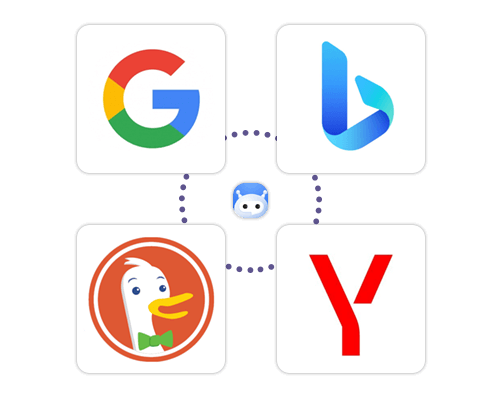
Proxies are the invisible engine behind many of the SEO tools professionals use every day. Whether you're tracking rankings, auditing websites, or scraping search engine results, integrating proxies can supercharge your efficiency – and keep you off Google’s radar.
Here are some of the most common SEO tools that pair seamlessly with proxies:
1. Rank Tracking Tools
Tools like SEMrush and Ahrefs rely on sending queries to search engines to check keyword positions. When run at scale, this can quickly trigger IP bans without proxy protection.
Proxies allow rank trackers to pull accurate, geo-targeted rankings without restrictions – and rotating proxies ensure each keyword check appears to come from a different user, reducing the risk of CAPTCHAs or blockages. Advanced users also build their own trackers using Python scripts or tools like Scrapy or BeautifulSoup, all of which benefit from proxy rotation and localization.
Efficient Web Scraping Using Scrapy: Strategies and Best Practices
Let’s learn how to effectively use Scrapy for web scraping with this comprehensive guide – and explore techniques, handle challenges, and troubleshoot common issues to build efficient scrapers.
Pavlo Zinkovski
2. SERP Scrapers and Data Extraction Tools
Search engine results pages are full of useful SEO data – from featured snippets and ads to video placements and local packs. But scraping these pages in real time requires proxies.
3. Keyword Research and Content Intelligence Platforms
Custom-built scrapers for tools like Google Suggest rely on querying search engines repeatedly. This is another scenario where proxies are essential:
- Enables bulk keyword discovery from multiple locations.
- Ensures you don’t get flagged for automation.
Google Search Results Scraping: How to Scrape SERP without Blocking | Infatica
Google search result data can help your business – but how can you access it? Use this guide to learn more about APIs and services designed for scraping Google pages.
Jan Wiśniewski
4. On-Page and Technical SEO Tools
While many tools focus more on your own site than external data, proxies can still be useful if you're:
- Crawling competitor websites.
- Auditing large-scale client websites from different geos.
- Testing page accessibility across regions.
5. Local SEO & Mobile SEO Testing
When accuracy matters – especially in local search or mobile-first indexing – proxies become a must. Use mobile proxies to simulate mobile search behavior – and see results exactly as users would in a specific city or zip code.
How AI Overviews Change SEO Monitoring
AI Overviews add a new layer to SEO tracking. Instead of monitoring only traditional organic positions, SEO teams now need to understand when an AI-generated summary appears, which sources it references, which brands it mentions, and how much space remains for standard organic results.
This changes the way search visibility is measured. A page may still rank well organically, but if an AI Overview appears above it, users may see the generated answer before they reach the traditional results. In other cases, a brand may appear inside the AI Overview even if its page is not the first organic result. That makes SERP monitoring more complex than simple rank tracking.
AI Overviews can also vary by query, location, language, and device context. A search from one country may show a different summary, cite different sources, or display no AI Overview at all compared with the same keyword searched elsewhere. For international SEO teams, this makes localized monitoring more important.
As AI-generated search features become more common, SEO reporting needs to cover more than blue-link rankings. Teams should monitor the full SERP: organic results, ads, local packs, featured snippets, People Also Ask blocks, and AI Overviews.
For teams that need structured AI search data at scale, an AI Search Data API can be a useful next step for collecting and analyzing this information more systematically.
Frequently Asked Questions
An SEO proxy is an intermediary server that routes your search engine requests through different IP addresses, helping you scrape SERPs, track rankings, and gather SEO data without getting blocked or rate-limited.
Search engines limit how many requests a single IP can make. Proxies let keyword tracking tools rotate IPs, avoid blocks, and provide accurate results – even when checking thousands of keywords at once.
Free proxies often have slow speeds, unreliable uptime, and a high risk of being blacklisted. For serious SEO work, premium proxies offer better performance, stability, and security – especially for web scraping and automation.
Residential proxies use IPs from real devices, making them harder to detect and block. Datacenter proxies are faster and cheaper but more likely to be flagged during high-volume or sensitive SEO tasks.
Yes – geo-targeted proxies allow you to view and scrape localized SERPs as if you were searching from a specific city or country. This is essential for accurate local SEO audits and international SEO strategies.
Yes: collecting publicly available search data for rank tracking, competitor analysis, and audits is a legitimate use. Choose an ethically-sourced, KYC-verified provider.
Yes. Rotating residential IPs distribute requests across many real-user addresses, which sharply reduces CAPTCHAs and blocks compared with a single IP or datacenter range.
Residential proxies for most rank tracking and localized work; datacenter for high-volume, less-sensitive crawling; mobile for mobile-SERP testing.
Rarely well: free proxy pools are small, often already blacklisted, and unreliable for consistent SERP data. They’re fine for one-off tests, not production tracking.