Article content

Jan Wiśniewski
5 min read
Private proxies have become a key tool for maintaining stability, avoiding unnecessary blocks, and running automation without interruptions. Whether you're managing accounts, collecting data, or accessing region-specific content, private proxies offer a level of consistency that shared or rotating solutions can’t match. Let’s see how they help organizations build flexible, resilient workflows that scale smoothly with evolving data needs.
How Private Proxies Work
At a technical level, private proxies function as an exclusive intermediary between the user and the target website or service. When a request is sent through a private proxy, it is routed first through the proxy server, which replaces the user's original IP address with the dedicated proxy IP. The target website sees only the proxy’s IP – never the user’s own – creating a stable, isolated online identity.
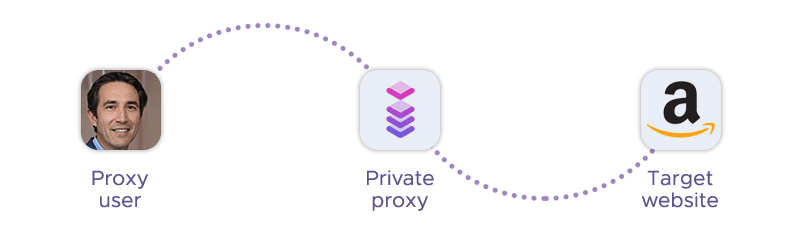
Because the IP is not shared with other users, its reputation remains consistent. This has two major advantages: fewer collateral bans caused by unrelated activity, and more predictable behavior when interacting with websites that monitor IP histories. Tasks such as logging into accounts, scraping dashboards, or running long-term automation benefit from this consistency.
The underlying network type also affects performance. Datacenter-based private proxies deliver high speed and low latency; ISP or static residential private proxies offer stronger trust and block resistance; and specialized configurations can prioritize session stability or global distribution. Regardless of the source, the defining characteristic remains the same: one user, one IP, complete exclusivity.
Key Advantages of Private Proxies
Private proxies offer several clear benefits for teams that rely on predictable, stable online behavior. Their exclusivity ensures that each IP address maintains a clean reputation with no interference from other users, reducing the likelihood of unexpected blocks or rate limits caused by unrelated activity. This level of control is especially valuable when managing accounts, monitoring sensitive data, or interacting with platforms that track IP histories closely.

Persistent online identity: They allow session cookies, authentication tokens, and long-lived logins to function reliably. This is crucial for workflows that break when the IP changes unexpectedly, such as monitoring user-specific pages or performing repeated actions from the same environment.
Flexibility in network origin: Datacenter private proxies deliver speed; ISP and static residential options offer stronger trust and fewer CAPTCHAs; and specialized configurations can be tailored for particular platforms. This adaptability gives businesses the precision to match the right proxy type to their specific operational needs while maintaining exclusivity.

Consistent performance: Since the IP’s bandwidth and routing are not shared, tasks run at steady speeds without sudden slowdowns or connection conflicts. This makes private proxies ideal for applications that require continuous uptime – from analytics dashboards and ecommerce management tools to custom automation scripts.
Private Proxy Types
| Proxy Type | Speed | Stability | Block Resistance | Best Use Cases |
|---|---|---|---|---|
| Private Datacenter Proxies | Very fast | High | Moderate | Account management, dashboards, automation with stable IPs |
| Private ISP / Static Residential Proxies | Fast–Moderate | Very high | High | Long-lived sessions, ecommerce, social media management |
| Residential Rotating Proxies | Moderate | Variable | Very high | Large-scale scraping, price monitoring, SEO data collection |
| Mobile Proxies | Moderate | High | Very high | Highly protected targets, ad verification, anti-fraud tasks |
| Residential IPv6 Proxies | Fast | High | Very high | High-volume scraping, tasks that accept IPv6 traffic |
How to Choose a Private Proxy Provider
Not all private proxies offer the same performance – and the difference often becomes clear only once you scale your operations. To avoid costly disruptions later, it’s worth assessing several key factors before committing to a provider:
IP pool size
A broad geographic footprint and large address space help maintain flexibility as your targeting needs evolve. Equally important is the reputation of each IP range. Clean, well-maintained IPs reduce the risk of bans and ensure better results on platforms that closely monitor traffic patterns.
Authentication methods
Support for both IP whitelisting and user/password authentication makes it easier to plug private proxies into existing infrastructure, whether you rely on custom scripts, internal tools, or third-party scraping frameworks. A well-designed dashboard, clear documentation, usage analytics, and an accessible API indicate that the provider has invested in long-term usability.
Reliability
Consistent uptime, clear performance guarantees, and rapid issue resolution can significantly reduce downtime for workflows that depend on stable sessions. Providers that offer a mix of datacenter, ISP, residential, and mobile proxies also give you more flexibility down the line – making it easier to adapt when your use case expands beyond what a private proxy alone can handle.
Customer support
When dealing with complex data collection tasks or sensitive platforms, having a responsive, knowledgeable support team greatly simplifies troubleshooting and optimization.

Quick Start
Ready to streamline your data workflows with reliable private proxies? Test our proxy network and see which IP type fits your use case best.
Frequently Asked Questions
A private proxy is a dedicated IP address used exclusively by one user. It provides stable performance, a consistent online identity, and fewer blocks compared to shared or rotating proxies, making it ideal for long-running or authenticated tasks.
Shared proxies are used by multiple clients simultaneously, while rotating proxies automatically change IPs over time. Private proxies remain exclusive to one user, offering better stability, predictable behavior, and a clean IP reputation for sensitive or session-based workflows.
Private proxies are best for tasks that require consistent identities–such as account management, dashboards, or ecommerce monitoring. Residential or mobile proxies are better when block resistance or large-scale IP rotation is the primary requirement.
Yes. Private proxies provide a controlled, stable environment for automation and reduce the risk of collateral bans caused by other users. However, following best practices–such as varying headers and monitoring block rates–remains essential for reliable performance.
Yes. Providers typically offer private proxies in multiple countries and cities. This allows you to route traffic through specific regions for localized testing, content access, or compliance needs, while maintaining a dedicated, exclusive IP for your workflow.