Article content


Jovana Gojkovic
5 min read
Accurate market research depends on accessing the same information real users see – across regions, devices, and platforms. Yet many websites personalize content, restrict geolocated data, or block automated traffic, making it harder for teams to gather unbiased insights at scale. Proxies solve this challenge by enabling researchers to reach location-specific content, avoid IP-based blocks, and collect consistent datasets that reflect real market conditions.
What Challenges Do Researchers Face Today?
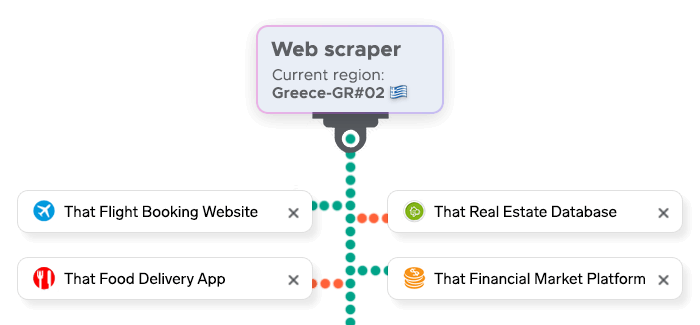
Market research teams increasingly operate in an environment where data is fragmented, personalized, and frequently protected by strict access controls. Most modern websites use sophisticated systems to detect automated traffic, limit repeated requests, or block users who appear to be collecting data at scale. This makes it difficult to gather large, representative datasets without running into CAPTCHAs, throttling, or outright IP bans.
Another major obstacle is geo-restriction. Pricing, product availability, ads, search results, and even reviews can differ significantly from one country or city to another. Without the ability to view content as users in different locations, researchers risk basing their insights on incomplete or regionally skewed data. Even when content is accessible, personalization algorithms may tailor it based on user history or device profile, making manual or standard scraping approaches unreliable.
On top of this, data integrity challenges continue to grow. Many platforms display dynamic or A/B-tested information, meaning users in different segments see different versions of the same page. When researchers collect data without controlling for these variations, the end result can be inconsistent datasets that are hard to validate or compare over time.
When to Use Each Proxy Type in Market Research
| Proxy Type | Best For | Key Strengths | Typical Market Research Use Cases |
|---|---|---|---|
| Residential Proxies | Tasks requiring high trust and low block rates | Real user IPs, excellent stealth, broad geo coverage | Competitor price tracking, review scraping, sentiment analysis, ad verification |
| Datacenter Proxies (Shared/Dedicated) | High-volume, performance-driven tasks | Fast, affordable, ideal for large-scale scraping | SERP monitoring, bulk data collection, large-scale e-commerce scraping |
| Static ISP Proxies | Workflows needing persistent, stable sessions | Residential IPs via ISPs + datacenter reliability | E-commerce monitoring, checkout testing, long-lived sessions, marketplace intelligence |
| Mobile Proxies | Highly restricted or mobile-only platforms | Highest trust score, natural rotation through mobile carriers | Mobile SERP research, app intelligence, social media research, mobile ad verification |
Top Market Research Use Cases Enhanced by Proxies
Let’s take a closer look at the key market research tasks where proxies make the biggest impact.
Competitor Price Tracking
Dynamic pricing models adjust product prices based on region, device type, user behavior, or demand. Without proxies, researchers often see incomplete or highly personalized data. Using residential or static ISP proxies allows teams to mimic real user traffic across locations, ensuring accurate price comparisons, identifying price discrimination, and monitoring real-time fluctuations without triggering anti-bot defenses.
Competitor Price Monitoring: Best Practices, Challenges & Solutions
Let’s overview of competitor price tracking: essential data, challenges, industry use cases, and automation-driven solutions.
 Jan Wiśniewski
Review & Sentiment Analysis
Platforms often limit how many reviews can be accessed from a single IP, and some hide or reorder content depending on user behavior. Proxies enable distributed access, letting researchers gather full review datasets, uncover manipulated or deleted feedback, and analyze sentiment trends more reliably. Residential proxies work best here due to their trustworthiness and ability to blend in with normal user traffic.
SERP and SEO Monitoring

Search engine results differ widely across geographies, devices, and user profiles. Mobile and datacenter proxies help SEO teams access local SERPs, compare ranking differences, monitor competitor ads, and analyze organic visibility. Proxies also support large-scale keyword research operations by preventing rate limits and IP blocks across thousands of queries.
E-commerce Marketplaces & Product Intelligence
Marketplaces often show different product availability, shipping options, rankings, and promotions depending on location and account status. Static ISP and residential proxies give researchers stable sessions for long-running monitoring tasks, making it easier to track product listings, competitor strategies, and inventory changes over time.
Ad Verification
Online ads are highly geo-targeted, device-specific, and frequently manipulated by bad actors. Mobile and residential proxies let verification teams see ads exactly as different audiences do, ensuring campaigns display correctly, checking for fraud, and validating that placements match the advertiser’s targeting settings.
How to Choose the Right Proxy for Your Research
Geo requirements: If your research depends on viewing localized content or validating how products appear in different markets, choose proxy pools with strong geographic coverage. Residential and mobile networks generally offer the widest geo distribution, while static ISP proxies provide stable, long-lived sessions ideal for monitoring specific regions over time.

Volume and frequency of data collection: High-volume scraping tasks, such as SERP monitoring or marketplace-wide product tracking, typically require datacenter proxies due to their speed and affordability. For workflows involving highly protected platforms or personalized content – such as e-commerce product pages, user reviews, or location-specific data – residential or mobile proxies are often more effective thanks to their natural trust and broad IP diversity.
Session persistence or rotation. Long-running interactions (like checkout testing or continuous price monitoring) benefit from static ISP proxies, which maintain the same IP for extended periods. Meanwhile, rotational residential or mobile proxies work best for distributed data collection where you want every request to appear unique.

Ready to Strengthen Your Research?
Explore Infatica’s full range of proxy networks – residential, datacenter, static ISP, and mobile – and build a market research setup tailored to your data needs. Start collecting accurate insights at scale today!
Frequently Asked Questions
Proxies help researchers access geo-specific, unbiased data by routing requests through different IPs. This prevents blocks, avoids personalization, and ensures datasets accurately reflect real user experiences across markets, platforms, and devices.
Datacenter proxies are ideal for high-volume tasks thanks to their speed and cost efficiency. They handle large scraping workloads, making them suitable for SERP checks, bulk product data collection, and recurring monitoring activities.
By masking requests through diverse IPs and locations, proxies allow researchers to view pricing as real users in different regions. This avoids personalized or restricted pricing, providing accurate insights into competitor strategies and market trends.
Yes. Many platforms limit access to reviews from a single IP. Residential or mobile proxies distribute requests naturally, enabling researchers to gather complete review datasets and analyze sentiment without triggering rate limits or content restrictions.
Mobile proxies route traffic through cellular networks, offering the highest trust score and minimal blocking. They’re especially useful for mobile SERP monitoring, app intelligence, social media research, and validating mobile-targeted ads or promotions.